


Welcome back to the Old Way On community! Today, we’re diving into a multifaceted spring adventure captured in our latest YouTube video, where we blend DIY ingenuity, outdoor exploration, and sustainable homesteading practices. From constructing a kayak rack to paddling on Bull Shoals Lake, tending to our Back to Eden garden, and nurturing a broody hen, this video is a celebration of hands-on projects and living in harmony with nature. Let’s break down the highlights, weave in some historical context, and share insights that resonate with the Old Way On ethos of self-reliance and sustainability.
Crafting a DIY Kayak Rack: A Nod to Traditional Woodworking
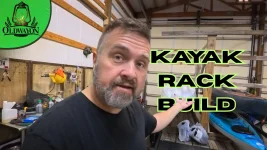
The video kicks off with the construction of a removable kayak rack for our utility trailer, built using leftover 2x6 lumber from previous projects. Designed to hold up to 10 kayaks with 20 inches of space each, this rack is both practical and versatile, allowing easy attachment to different trailers or standalone use on the ground. We didn’t follow a strict blueprint—just a mix of online inspiration and trial-and-error, echoing the resourcefulness of early American settlers who often built tools and structures with whatever materials were at hand.
Historical Context: Woodworking has deep roots in human history, with evidence of carpentry dating back to ancient Egypt around 3000 BCE, where wooden boats and furniture were crafted with basic tools (Mark, 2016). In colonial America, settlers relied on hand-hewn timber to build everything from homes to farm equipment, often using recycled or locally sourced wood, much like our use of leftover 2x6s. This DIY kayak rack reflects that same spirit of making do with what’s available, a cornerstone of homesteading then and now.
We plan to enhance the rack with bunk carpet, LED lights, and treated wood to ensure durability, while addressing wind load concerns for highway travel. The design may evolve with carriage bolts and additional cross beams, but for now, it’s a functional prototype that gets the job done. The collaborative effort, with help from friends Jenny and Angelo, underscores the communal aspect of homesteading, reminiscent of barn-raising gatherings in 19th-century rural America (Fischer, 1989).
Kayaking on Bull Shoals Lake: Embracing Nature’s Challenges
Next, we ventured to Bull Shoals Lake, where water levels were unusually high—estimated at 50 feet above normal—transforming the shoreline and submerging pontoons typically on dry land. This section of the video captures our testing of new kayaks, exploring fishing spots, and navigating the challenges of high water, all while managing physical limitations from a recent injury.
Historical Context: Kayaking has ancient origins, with Indigenous peoples like the Inuit crafting kayaks from animal skins and wood for hunting and transportation as early as 4000 BCE (Heath & Arima, 2004). Bull Shoals Lake, a man-made reservoir created in 1951 by the U.S. Army Corps of Engineers, reflects a more modern chapter in human interaction with waterways, designed for flood control, hydropower, and recreation (U.S. Army Corps of Engineers, 2023). The high water levels we encountered are a reminder of nature’s unpredictability, a challenge faced by early explorers and modern adventurers alike.
Paddling offered a chance to reconnect with the landscape, test equipment, and scope out fishing areas, aligning with the Old Way On philosophy of living closely with the natural world. The absence of a planned paddling montage due to camera rail issues only added to the authenticity—sometimes, you just go with the flow, much like the pioneers who adapted to whatever conditions they faced.
Back to Eden Gardening: Cultivating Resilience
Back at the homestead, we toured our Back to Eden garden, a no-till method inspired by Paul Gautschi’s approach to mimicking natural ecosystems with wood chips and organic matter. We checked on thriving grapes, thornless raspberries, blackberries, blueberries, and volunteer tomatoes, though deer had decimated our strawberries—a reminder of the challenges of farming without constant oversight. The oregano patch, destined for homemade oil, was a highlight, as were the walking onions, a hardy heirloom crop.
Historical Context: The Back to Eden method draws on ancient agricultural practices, such as the Native American “Three Sisters” system, which combined corn, beans, and squash to naturally enrich soil and maximize yields (Mt. Pleasant, 2006). In the 19th century, American homesteaders often practiced companion planting and crop rotation to sustain their land, a precursor to modern sustainable gardening (Conkin, 2008). Our garden, planted last year amidst health challenges, reflects this legacy of working with nature rather than against it, though the deer damage highlights the need for protective measures like electric fencing, a modern take on traditional wooden or stone barriers.
The volunteer tomatoes, sprouting from last year’s dropped seeds, are a testament to nature’s resilience, while the struggling tea leaves signal a need for better soil nutrition—a learning curve familiar to farmers across centuries. Our plans for late summer and fall planting aim to revive the garden’s productivity, embodying the persistence of homesteaders past and present.
Bamboo as a Wind Barrier: A Sustainable Solution
A quick update on our bamboo wind and privacy barrier showcased its remarkable growth from just five plants, despite a harsh late-spring cold snap. Planted on the south side of the property, this decor bamboo is thriving, with edible shoots and runners staying mostly contained within the bed. This project aligns with sustainable land management, providing both ecological and aesthetic benefits.
Historical Context: Bamboo has been used for millennia in Asia for construction, tools, and food, with records of its cultivation in China dating back to 1000 BCE (Farrelly, 1984). In the U.S., bamboo was introduced in the 19th century as an ornamental and utilitarian plant, valued for its rapid growth and versatility (Lewis & Miles, 2008). Our use of bamboo as a windbreak echoes historical practices of using natural barriers, like hedgerows in medieval Europe or tree lines in the American Midwest, to protect crops and livestock (Pollan, 2001).
The bamboo’s success despite adverse weather highlights its potential as a low-maintenance, sustainable feature for homesteaders, offering a living fence that’s both functional and edible—a perfect fit for the Old Way On community.
Nurturing a Broody Hen: A Step Toward Self-Sufficiency
One of the video’s most heartwarming moments was setting up a birthing pen for a broody hen determined to hatch her eggs. Using sheet metal for shade and placing the pen near the coop, we ensured her safety from other birds. Coaxing her into the pen was a small victory, dubbed a “chicken whisperer” moment, and reflects the patience required in animal husbandry.
Historical Context: Raising chickens has been a cornerstone of self-sufficient households since their domestication in Southeast Asia around 6000 BCE (West & Zhou, 1988). In 19th-century America, chickens were a primary source of eggs and meat for homesteaders, with broody hens carefully tended to ensure flock growth (Smith, 2007). Our setup, while modernized with a metal cage, mirrors the care taken by early farmers to protect brooding hens, often using wooden coops or natural shelters.
This project is a step toward greater self-reliance, reducing dependence on external sources for chicks and aligning with the Old Way On mission to revive traditional skills in a modern context.
Skid Steer Work and Garden Prep: Unearthing Possibilities
The video wraps up with a time-lapse of using a skid steer to create a new garden row in the Back to Eden setup, mounding dirt and adding wood chips. Along the way, we unearthed debris like a broken sign, a reminder of the hidden surprises often found in reclaimed materials. This task, done to accommodate physical limitations, showcases the adaptability required in homesteading.
Historical Context: Mechanized equipment like the skid steer is a modern evolution of tools like the plow, which revolutionized agriculture in ancient Mesopotamia around 3000 BCE (Postgate, 1992). In the 19th century, American farmers adopted horse-drawn implements, later replaced by tractors, to ease the labor of land preparation (Hurt, 2002). Our use of a skid steer to prep garden rows connects to this lineage of innovation, allowing us to maintain productivity despite health challenges, much like farmers who adapted to physical or environmental constraints in the past.
Reflections and Future Plans
This spring adventure encapsulates the Old Way On spirit: blending DIY craftsmanship, outdoor exploration, and sustainable practices to live more intentionally. From the kayak rack to the garden, bamboo barrier, and chicken pen, each project reflects the resourcefulness and resilience of historical homesteaders while embracing modern tools and techniques. The challenges—like deer damage and high lake waters—remind us that nature is a partner, not a servant, requiring patience and adaptation.
Looking ahead, we plan to refine the kayak rack, plant for late summer and fall, and continue nurturing our flock and bamboo barrier. We invite the Old Way On community to share your own homesteading tips, DIY projects, or experiences with sustainable living in the forum. How do you balance modern tools with traditional methods? Let’s keep the conversation growing!
Sources:

Crafting a DIY Kayak Rack: A Nod to Traditional Woodworking
The video kicks off with the construction of a removable kayak rack for our utility trailer, built using leftover 2x6 lumber from previous projects. Designed to hold up to 10 kayaks with 20 inches of space each, this rack is both practical and versatile, allowing easy attachment to different trailers or standalone use on the ground. We didn’t follow a strict blueprint—just a mix of online inspiration and trial-and-error, echoing the resourcefulness of early American settlers who often built tools and structures with whatever materials were at hand.
Historical Context: Woodworking has deep roots in human history, with evidence of carpentry dating back to ancient Egypt around 3000 BCE, where wooden boats and furniture were crafted with basic tools (Mark, 2016). In colonial America, settlers relied on hand-hewn timber to build everything from homes to farm equipment, often using recycled or locally sourced wood, much like our use of leftover 2x6s. This DIY kayak rack reflects that same spirit of making do with what’s available, a cornerstone of homesteading then and now.
We plan to enhance the rack with bunk carpet, LED lights, and treated wood to ensure durability, while addressing wind load concerns for highway travel. The design may evolve with carriage bolts and additional cross beams, but for now, it’s a functional prototype that gets the job done. The collaborative effort, with help from friends Jenny and Angelo, underscores the communal aspect of homesteading, reminiscent of barn-raising gatherings in 19th-century rural America (Fischer, 1989).
Kayaking on Bull Shoals Lake: Embracing Nature’s Challenges
Next, we ventured to Bull Shoals Lake, where water levels were unusually high—estimated at 50 feet above normal—transforming the shoreline and submerging pontoons typically on dry land. This section of the video captures our testing of new kayaks, exploring fishing spots, and navigating the challenges of high water, all while managing physical limitations from a recent injury.
Historical Context: Kayaking has ancient origins, with Indigenous peoples like the Inuit crafting kayaks from animal skins and wood for hunting and transportation as early as 4000 BCE (Heath & Arima, 2004). Bull Shoals Lake, a man-made reservoir created in 1951 by the U.S. Army Corps of Engineers, reflects a more modern chapter in human interaction with waterways, designed for flood control, hydropower, and recreation (U.S. Army Corps of Engineers, 2023). The high water levels we encountered are a reminder of nature’s unpredictability, a challenge faced by early explorers and modern adventurers alike.
Paddling offered a chance to reconnect with the landscape, test equipment, and scope out fishing areas, aligning with the Old Way On philosophy of living closely with the natural world. The absence of a planned paddling montage due to camera rail issues only added to the authenticity—sometimes, you just go with the flow, much like the pioneers who adapted to whatever conditions they faced.
Back to Eden Gardening: Cultivating Resilience
Back at the homestead, we toured our Back to Eden garden, a no-till method inspired by Paul Gautschi’s approach to mimicking natural ecosystems with wood chips and organic matter. We checked on thriving grapes, thornless raspberries, blackberries, blueberries, and volunteer tomatoes, though deer had decimated our strawberries—a reminder of the challenges of farming without constant oversight. The oregano patch, destined for homemade oil, was a highlight, as were the walking onions, a hardy heirloom crop.
Historical Context: The Back to Eden method draws on ancient agricultural practices, such as the Native American “Three Sisters” system, which combined corn, beans, and squash to naturally enrich soil and maximize yields (Mt. Pleasant, 2006). In the 19th century, American homesteaders often practiced companion planting and crop rotation to sustain their land, a precursor to modern sustainable gardening (Conkin, 2008). Our garden, planted last year amidst health challenges, reflects this legacy of working with nature rather than against it, though the deer damage highlights the need for protective measures like electric fencing, a modern take on traditional wooden or stone barriers.
The volunteer tomatoes, sprouting from last year’s dropped seeds, are a testament to nature’s resilience, while the struggling tea leaves signal a need for better soil nutrition—a learning curve familiar to farmers across centuries. Our plans for late summer and fall planting aim to revive the garden’s productivity, embodying the persistence of homesteaders past and present.
Bamboo as a Wind Barrier: A Sustainable Solution
A quick update on our bamboo wind and privacy barrier showcased its remarkable growth from just five plants, despite a harsh late-spring cold snap. Planted on the south side of the property, this decor bamboo is thriving, with edible shoots and runners staying mostly contained within the bed. This project aligns with sustainable land management, providing both ecological and aesthetic benefits.
Historical Context: Bamboo has been used for millennia in Asia for construction, tools, and food, with records of its cultivation in China dating back to 1000 BCE (Farrelly, 1984). In the U.S., bamboo was introduced in the 19th century as an ornamental and utilitarian plant, valued for its rapid growth and versatility (Lewis & Miles, 2008). Our use of bamboo as a windbreak echoes historical practices of using natural barriers, like hedgerows in medieval Europe or tree lines in the American Midwest, to protect crops and livestock (Pollan, 2001).
The bamboo’s success despite adverse weather highlights its potential as a low-maintenance, sustainable feature for homesteaders, offering a living fence that’s both functional and edible—a perfect fit for the Old Way On community.
Nurturing a Broody Hen: A Step Toward Self-Sufficiency
One of the video’s most heartwarming moments was setting up a birthing pen for a broody hen determined to hatch her eggs. Using sheet metal for shade and placing the pen near the coop, we ensured her safety from other birds. Coaxing her into the pen was a small victory, dubbed a “chicken whisperer” moment, and reflects the patience required in animal husbandry.
Historical Context: Raising chickens has been a cornerstone of self-sufficient households since their domestication in Southeast Asia around 6000 BCE (West & Zhou, 1988). In 19th-century America, chickens were a primary source of eggs and meat for homesteaders, with broody hens carefully tended to ensure flock growth (Smith, 2007). Our setup, while modernized with a metal cage, mirrors the care taken by early farmers to protect brooding hens, often using wooden coops or natural shelters.
This project is a step toward greater self-reliance, reducing dependence on external sources for chicks and aligning with the Old Way On mission to revive traditional skills in a modern context.
Skid Steer Work and Garden Prep: Unearthing Possibilities
The video wraps up with a time-lapse of using a skid steer to create a new garden row in the Back to Eden setup, mounding dirt and adding wood chips. Along the way, we unearthed debris like a broken sign, a reminder of the hidden surprises often found in reclaimed materials. This task, done to accommodate physical limitations, showcases the adaptability required in homesteading.
Historical Context: Mechanized equipment like the skid steer is a modern evolution of tools like the plow, which revolutionized agriculture in ancient Mesopotamia around 3000 BCE (Postgate, 1992). In the 19th century, American farmers adopted horse-drawn implements, later replaced by tractors, to ease the labor of land preparation (Hurt, 2002). Our use of a skid steer to prep garden rows connects to this lineage of innovation, allowing us to maintain productivity despite health challenges, much like farmers who adapted to physical or environmental constraints in the past.
Reflections and Future Plans
This spring adventure encapsulates the Old Way On spirit: blending DIY craftsmanship, outdoor exploration, and sustainable practices to live more intentionally. From the kayak rack to the garden, bamboo barrier, and chicken pen, each project reflects the resourcefulness and resilience of historical homesteaders while embracing modern tools and techniques. The challenges—like deer damage and high lake waters—remind us that nature is a partner, not a servant, requiring patience and adaptation.
Looking ahead, we plan to refine the kayak rack, plant for late summer and fall, and continue nurturing our flock and bamboo barrier. We invite the Old Way On community to share your own homesteading tips, DIY projects, or experiences with sustainable living in the forum. How do you balance modern tools with traditional methods? Let’s keep the conversation growing!
Sources:
- Conkin, P. K. (2008). A Revolution Down on the Farm: The Transformation of American Agriculture since 1929. University Press of Kentucky.
- Farrelly, D. (1984). The Book of Bamboo. Sierra Club Books.
- Fischer, D. H. (1989). Albion’s Seed: Four British Folkways in America. Oxford University Press.
- Heath, J. D., & Arima, E. (2004). Eastern Arctic Kayaks: History, Design, Technique. University of Alaska Press.
- Hurt, R. D. (2002). American Agriculture: A Brief History. Purdue University Press.
- Lewis, R., & Miles, C. (2008). Bamboo: A Sustainable Alternative. University of Georgia Press.
- Mark, J. J. (2016). “Woodworking in Ancient Egypt.” Ancient History Encyclopedia.
- Mt. Pleasant, J. (2006). “The Science Behind the Three Sisters Mound System.” American Indian Quarterly, 30(3), 509-524.
- Pollan, M. (2001). The Botany of Desire. Random House.
- Postgate, J. N. (1992). Early Mesopotamia: Society and Economy at the Dawn of History. Routledge.
- Smith, A. F. (2007). The Oxford Companion to American Food and Drink. Oxford University Press.
- U.S. Army Corps of Engineers. (2023). “Bull Shoals Lake History.” Official Website.
- West, B., & Zhou, B. X. (1988). “Did Chickens Go North? New Evidence for Domestication.” Journal of Archaeological Science, 15(5), 515-533.