


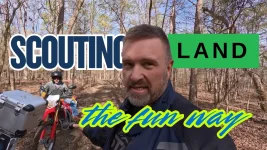
Had a chance to ride out deep into the Ozarks recently, scouting for land the old-fashioned way—eyes on the ground, real encounters with mud, gravel, and plenty of scenic overlooks. There’s something refreshing (and sometimes nerve-racking) about leaving the safety of the paved roads and heading into unknown territory with nothing more than a solid bike, some basic gear, and a willingness to adapt. It reminds me of how homesteaders in past centuries would scout for fertile soil or grazing land on horseback or wagon, guided by trails and local word of mouth rather than listing websites or realtors.
One thing I noticed is that even though these motorcycles are a blast, you can’t just rely on them alone. I found myself wishing I had planned more carefully: more robust first aid supplies, a better fix-a-flat kit, and a redundant navigation method so that my phone (which doubles as a camera and GPS) wouldn't be on battery life support the entire time. Historically, people planning a homestead might have carried livestock feed, wagon spares, maybe a second horse, or an anvil and blacksmith kit for shoe repair. In many ways, a little tool roll with modern patches and compressors is our equivalent today—but clearly, I’ll be expanding that kit for the next trip.
I’ve heard from a couple of local homesteading folks that the “Old Way” of scouting land also involved checking out local county records and physically walking the property lines, often with someone who knows the history of the place. Back in the 19th century, when folks traveled to the Ozarks with the dream of free or cheap land, they’d consult simple hand-drawn maps, talk to neighbors or passersby on the old wagon roads, and rely on personal inspection. According to the Homestead National Historical Park records, many families made choices based on proximity to fresh water, the condition of the soil, and whether a patch of timber was nearby for building and fuel. They might have had to climb ridges or hack through forest undergrowth just to see if a parcel was any good. We had the luxury of a motorcycle engine—but some of those rocky, rutted trails showed me exactly why a horse might still be more reliable in tight spots!
For those interested in trying this approach in a safer or more methodical way, here are a few tips I’ve picked up (and learned the hard way):
If you’re looking for property in the Ozarks or just craving the thrill of seeing new places on two wheels, take advantage of all the lessons both history and modern life can provide. The next time I head out, I’m bringing a better toolkit, a second phone, more power banks, and maybe a friend or two who can help if someone ends up in the ditch. And if that doesn’t work out, well, there’s always a donkey or horse to carry gear in the truly old-school style!
One thing I noticed is that even though these motorcycles are a blast, you can’t just rely on them alone. I found myself wishing I had planned more carefully: more robust first aid supplies, a better fix-a-flat kit, and a redundant navigation method so that my phone (which doubles as a camera and GPS) wouldn't be on battery life support the entire time. Historically, people planning a homestead might have carried livestock feed, wagon spares, maybe a second horse, or an anvil and blacksmith kit for shoe repair. In many ways, a little tool roll with modern patches and compressors is our equivalent today—but clearly, I’ll be expanding that kit for the next trip.
I’ve heard from a couple of local homesteading folks that the “Old Way” of scouting land also involved checking out local county records and physically walking the property lines, often with someone who knows the history of the place. Back in the 19th century, when folks traveled to the Ozarks with the dream of free or cheap land, they’d consult simple hand-drawn maps, talk to neighbors or passersby on the old wagon roads, and rely on personal inspection. According to the Homestead National Historical Park records, many families made choices based on proximity to fresh water, the condition of the soil, and whether a patch of timber was nearby for building and fuel. They might have had to climb ridges or hack through forest undergrowth just to see if a parcel was any good. We had the luxury of a motorcycle engine—but some of those rocky, rutted trails showed me exactly why a horse might still be more reliable in tight spots!
For those interested in trying this approach in a safer or more methodical way, here are a few tips I’ve picked up (and learned the hard way):
- Gear Up Wisely: Always bring a patch kit, an air compressor, spare tubes (if your bike uses them), and basic first-aid. Even a short trip can go sour if you end up limping along with a tire losing air.
- Multiple Navigation Options: A physical map or at least an offline version of a map can be a lifesaver. Remember that old settlers made detailed use of topographic knowledge. You can mirror that approach by downloading topographic layers or carrying a paper USGS map.
- Check the Soil and Water: From a homesteading angle, look for signs of healthy topsoil—dark color, rich organic matter, and evidence of good drainage. Finding a natural water source (creek, spring, or reliable well site) is historically how families survived in the backwoods. USDA soil surveys (available at many county extension offices) can also give you a modern perspective on what’s under your feet.
- Local Insight is Gold: Talk to longtime residents. Even if a property isn’t formally listed, you might hear about families ready to sell or lease out grazing land. In the past, communities knew every nook of the forest, so local knowledge is essential.
- Safety in Numbers: Going with at least one or two other riders (or travelers, if you’re hiking or on horseback) is a good call. Historic wagon trains had the right idea—there’s power and safety in a group, especially if the trail turns rough.
If you’re looking for property in the Ozarks or just craving the thrill of seeing new places on two wheels, take advantage of all the lessons both history and modern life can provide. The next time I head out, I’m bringing a better toolkit, a second phone, more power banks, and maybe a friend or two who can help if someone ends up in the ditch. And if that doesn’t work out, well, there’s always a donkey or horse to carry gear in the truly old-school style!
Attachments
Last edited: