


For those looking to extend their growing season and embrace sustainable food production, a passive solar greenhouse, also known as a walipini or underground greenhouse, is a tried-and-true method. This ancient technique utilizes the earth’s natural insulation and the sun’s warmth to create a stable growing environment year-round.
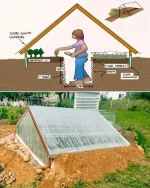
The top image provides a cross-sectional diagram of how this underground greenhouse is constructed. By digging below the frost line, the structure takes advantage of the earth’s natural temperature regulation. The transparent roof allows ample sunlight to penetrate, warming the space while minimizing heat loss. Key elements of the design include:
Whether you're homesteading or simply looking to grow fresh food in harsh winters, a passive solar greenhouse is a proven method that aligns with old-world wisdom and modern sustainability. Has anyone here built or maintained one? Share your experiences!
The top image provides a cross-sectional diagram of how this underground greenhouse is constructed. By digging below the frost line, the structure takes advantage of the earth’s natural temperature regulation. The transparent roof allows ample sunlight to penetrate, warming the space while minimizing heat loss. Key elements of the design include:
- Compost heating – Decomposing organic matter generates additional warmth.
- Cedar cribbing – Provides structural support to prevent soil collapse.
- Earth insulation – The surrounding soil acts as a thermal battery, keeping temperatures stable.
- Strategic glazing – The angled roof maximizes solar gain, critical for plant growth in winter.
Whether you're homesteading or simply looking to grow fresh food in harsh winters, a passive solar greenhouse is a proven method that aligns with old-world wisdom and modern sustainability. Has anyone here built or maintained one? Share your experiences!