


The hive is still there. Bees are flying in and out, so I’m calling that a win until I can actually get a suit on and look.
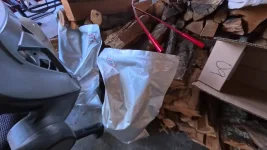
I still have about 50 pounds of sugar from last feeding season that I never even opened. I was sick. Then it got mean-hot. I’m getting better, but I am not putting on a full bee suit in this heat just to satisfy my curiosity and set my recovery back. Matthew — one of the local veteran beekeepers, and one of the best people you’ll meet around here — would help in a heartbeat. He’s also running a pile of hives and helping a lot of other vets. I try not to yank that string every time I’m behind.
I did cut all around the hive the other day. From the outside it looked fine. Next time I go back there I’m suiting up first, trimming, adding a super, and doing a real check. Last time I was in it, it was clean. Queen was laying. Good honey, good drones, good nectar. For a novice, that looked like a healthy box.
Honey is not “honey.”
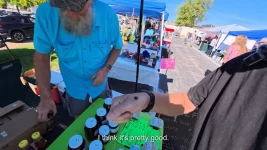
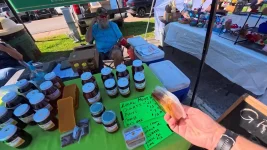
Color follows the bloom. Flavor follows the color more often than people think. That’s why the farmers market table is worth standing at. Homesteaders will also run heat through it — peppers and the like — if they want a blend. Comb honey is still the one I tell people to try first if they’ve only ever had the bear-bottle stuff.
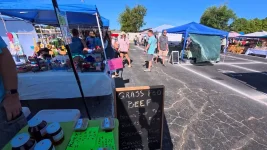
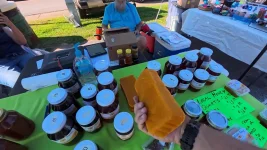
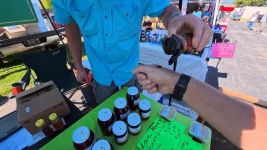
We taste-tested last weekend at the market, same folks we buy beef from.

Comb honey
Out-of-state: Colorado and Montana
Local: about 20 miles of bee-fly from the booth
Montana was stout. Flavor hangs on your tongue a long time — sweet, but a long sweet. Colorado ate more like sugar. Somebody said old honey turns to sugar eventually; that’s just crystallization, not spoiled honey. Local had its own bite. Even in one yard you can pull light off one side of a hive and dark off the other. Spring flow here can run darker than people expect. Darker usually means more flavor, at least to my tongue.
What I’m doing with ours

We’re going to see how dark ours is and whether there’s anything to spare. If there is, I’d rather give it back to the girls and try a split than sell the first extra jar. Ideal number on this place is at least four hives. Six or eight if we can keep them. There’s a few hundred acres in play — call it 300 to 500 depending how you count what they can actually work — with multiple water sources and mixed vegetation. That should make interesting honey if we don’t kill the colonies first.
That’s the update. Hive’s alive. Sugar’s still in the bag. Suit goes on before the next trim. Feed first. Split if we can.
What are you tasting in your honey this year — light spring, dark summer, or something that doesn’t taste like “honey” at all?
I still have about 50 pounds of sugar from last feeding season that I never even opened. I was sick. Then it got mean-hot. I’m getting better, but I am not putting on a full bee suit in this heat just to satisfy my curiosity and set my recovery back. Matthew — one of the local veteran beekeepers, and one of the best people you’ll meet around here — would help in a heartbeat. He’s also running a pile of hives and helping a lot of other vets. I try not to yank that string every time I’m behind.
I did cut all around the hive the other day. From the outside it looked fine. Next time I go back there I’m suiting up first, trimming, adding a super, and doing a real check. Last time I was in it, it was clean. Queen was laying. Good honey, good drones, good nectar. For a novice, that looked like a healthy box.
Honey is not “honey.”
Color follows the bloom. Flavor follows the color more often than people think. That’s why the farmers market table is worth standing at. Homesteaders will also run heat through it — peppers and the like — if they want a blend. Comb honey is still the one I tell people to try first if they’ve only ever had the bear-bottle stuff.
We taste-tested last weekend at the market, same folks we buy beef from.
Comb honey
Out-of-state: Colorado and Montana
Local: about 20 miles of bee-fly from the booth
Montana was stout. Flavor hangs on your tongue a long time — sweet, but a long sweet. Colorado ate more like sugar. Somebody said old honey turns to sugar eventually; that’s just crystallization, not spoiled honey. Local had its own bite. Even in one yard you can pull light off one side of a hive and dark off the other. Spring flow here can run darker than people expect. Darker usually means more flavor, at least to my tongue.
What I’m doing with ours
We’re going to see how dark ours is and whether there’s anything to spare. If there is, I’d rather give it back to the girls and try a split than sell the first extra jar. Ideal number on this place is at least four hives. Six or eight if we can keep them. There’s a few hundred acres in play — call it 300 to 500 depending how you count what they can actually work — with multiple water sources and mixed vegetation. That should make interesting honey if we don’t kill the colonies first.
That’s the update. Hive’s alive. Sugar’s still in the bag. Suit goes on before the next trim. Feed first. Split if we can.
What are you tasting in your honey this year — light spring, dark summer, or something that doesn’t taste like “honey” at all?
Attachments
-
 01-hive-still-flying-barn-update.webp39.9 KB · Views: 0
 -
 02-sweetwater-farm-comb-honey-table.webp97.3 KB · Views: 0
 -
 05-mountain-home-market-grass-fed-beef.webp114.6 KB · Views: 0
 -
 07-leftover-sugar-feed-bags.webp45.8 KB · Views: 0
 -
 08-recovery-and-hive-plan.webp48.2 KB · Views: 0
 -
 09-raw-beeswax-block-sweetwater.webp85 KB · Views: 0
 -
 10-pouring-honey-sample-on-hand.webp85.3 KB · Views: 1